5.1 Optimum results
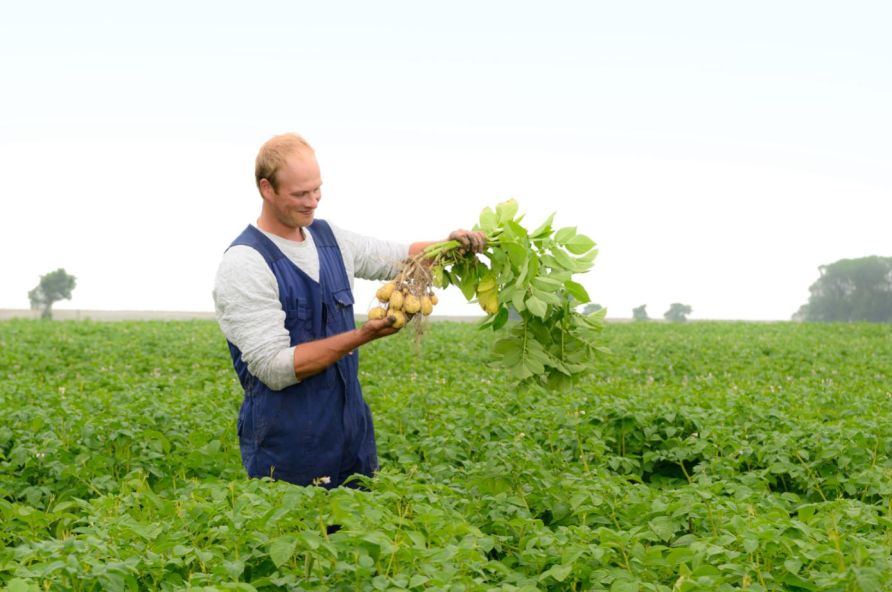
There's no growth without seed potatoes. Production for our customers is realised across the world by around 1,200 seed (potato) growers, about 500 of whom are based in the Netherlands. The growers in North-west Europe struggled with a tricky growing season in 2019. A high degree of virus, abundant aphids, and the limited use of pesticides really challenged the expertise of our growers to realise the very best result.
Expertise and guidance
Growing potatoes is often a profession that is handed down through the generations. Passion, emotion, and insight are important attributes when it comes to our growers. But knowledge about soil, fertilisers, diseases and pesticides is also crucial. Our growers are professionals and our cultivation supervisors are happy to support them. They maintain close contact with respect to issues such as planning, growing, administration and sharing knowledge. This concerns the potato itself but also the best possible growing conditions. This could include combating salinisation or the most efficient use of water and, in this context, we work closely with our growers and other parties in the region. Sustainability is another important issue. Issues such as cutting down on the use of resources, retaining hedgerow habitats, and fertilisers with residual substances are all important focus areas for our growers and cultivation supervisors.
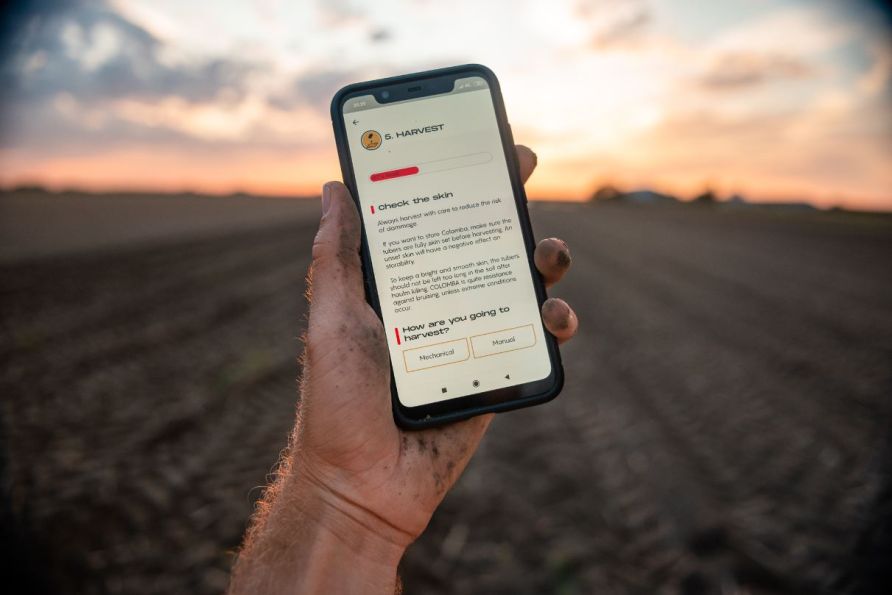
Modern technology is essential for the effective exchange of expertise with our customers and the provision of cultivation guidance. That is why we use apps for both seed and ware potato growers. This year, we are testing a real-time app which can facilitate the exchange of a great deal of information and expertise. This type of Decision Support System app allows more effective decisions to be made, right from the planning stage, through to the delivery of the potatoes. The system is based on current conditions and displays the averages of other users. It also allows users to exchange expertise and experience between themselves. The app will be tested during the 2020 growing season in Finland and the Netherlands.
We also introduced an app for ware potato growers last year in African and Asian countries, providing them with targeted expertise. It offers practical information and advice, explains which varieties are suitable and offers advice on the best times for planting. Growers are also provided with advice about fertilisers, crop protection agents and irrigation via the app.
Local for local
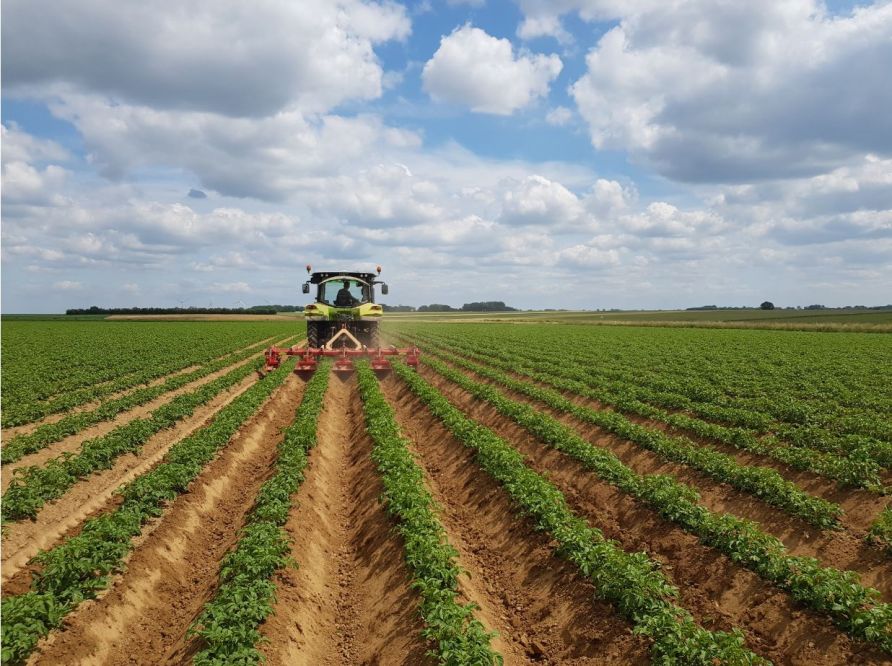
The Netherlands, with 15,000 hectares, is far and away the biggest production area for our seed potatoes. Production conditions in the Netherlands are ideal. However, we also have growers who produce seed potatoes for us our outside the country. This increasingly gives customers the choice to use locally produced seed potatoes. This ‘local for local’ principle is applied wherever possible as it limits transport kilometres and allows the potato variety to be optimised to the demands and growing conditions of the country concerned.
Local production is part of our growth strategy. There are further options in other European countries. After the Netherlands, France is the largest seed potato production country. Our acreage there has realised a two-fold increase over the last two years. Our French locations are the central ‘cog’ when it comes to sales to Belgium, Spain, Portugal and West Africa and we put the historical connections with France to good use with respect to the African market. France is also useful for growing varieties that can be ready on time for early delivery to Asia and Africa.
New branches
With the expansion of acreage, sales and the corresponding organisation, the HZPC branch in France was also due for an upgrade. So, we are building a modern office that fulfils the requirements of our modern times, using sustainable construction methods and creating an energy neutral building.
Our customers and seed potato growers in Belgium will be served via their own branch from 2020. HZPC Belgium officially started in March.
Local opportunities in Russia and China
We would like to apply the local production principle outside Europe too. In terms of the import of seed potatoes, Russia is a highly uncertain market. So we are producing the first generation of seed potatoes, including mini-tubers, in the country itself. This will ensure we can continue to serve the developing Russian market with our seed potatoes, without any import restrictions.
We are also aiming to take the availability of our varieties into our own hands in China and, to this end, are setting up a production location for tissue plants and mini-tubers.
Growing under licence
In many countries, growing under licence is an excellent supplement or even an alternative to our own seed potato growing. This alternative is particularly interesting when there are good partners and infrastructures for seed potato growing. Growing under licence takes place in China, India, Egypt, Russia, Poland, South Africa, Australia, New Zealand and North and South America. In these countries, we work intensively with our partners with respect to growing and selling our varieties. The varieties are transported to the countries as mother plants and then cultivated in the laboratory and bred to create tissue plants. The tissue plants are then planted on to produce mini-tubers which, in turn are planted on to produce seed potatoes.
We have to be particularly careful in this market with regard to our intellectual property rights and we can and will intervene when our varieties are used unlawfully. In this context, we have been successful on a number of occasions. The International Appeals Court in Singapore found in our favour recently in a case against a Chinese company. This ruling will now be converted into a claim for compensation. The preliminary case has already been put to the International Court.
Growing in India
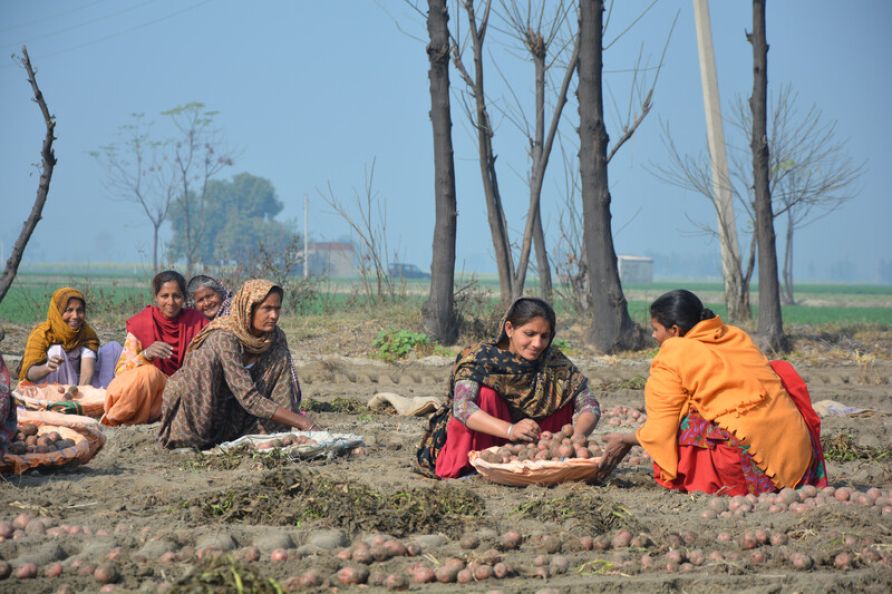
In 2014, we founded the joint venture Mahindra-HZPC with Mahindra. After working with local varieties, we have now registered our first HZPC varieties and also set up a network of professional seed potato growers. In the last growing season, production and sales amounted to 13,000 tons of seed potatoes, 300 tons of which were HZPC varieties. We will roll this out to 1,200 tons next year.
This cultivation in India is a central element in terms of our Asian ambitions. Colomba offers good yields in a growing period of 90 days, which means that the potatoes can be grown between two other crops. This is positive in terms of food production and the dietary patterns in this country, which has the most rapidly growing population in the world. There is very good reason for the government providing support for potato growing. Potatoes have a high nutritional value and need a lot less water for growing, than rice and grain. Which is precisely why the potato fits into a sustainable diet so effectively.
Our fries varieties Santana and Innovator are in full production in India. We have identified great opportunities for the processing industry in this country which, by 2035, is predicted to have the highest number of inhabitants in the world, even surpassing China.
One benefit of growing in India is that we also have the option to export to countries with a similar climate, such as South-east Asia and East Africa. The Netherlands and Asia have different growing seasons due to their global positions. When Dutch seed potatoes are being harvested, the planting season is just starting in South-East Asia. This means that if there are any delays in the Dutch crop, it is too late to ship to South-East Asia. In India, the harvest takes place in March and this is just in time for the 'winter growing season’ in South-East Asia and East Africa.
As well as our fries varieties, our varieties Colomba (fresh) and Taurus (crisps) have performed well in India over the past few years. We are very satisfied with the first major year, which has seen the introduction of our own varieties. Our participation in the joint venture is still not profitable but we expect this to change, for the better, in two years.
Brexit
After much negotiation and a political impasse, on 31 January 2020, Brexit became a reality; the United Kingdom is definitely leaving the European Union. This move has huge consequences for trade with the United Kingdom and will also impact on HZPC, particularly if it turns into a hard Brexit and no agreements are made.
The impact on the operational side of things won’t be too extensive. HZPC UK has developed over the past few years and we have a good share of the British market, which can be further expanded. The corresponding seed potatoes are largely also produced (local for local) in the United Kingdom (England and Scotland), although the very best quality seed potatoes still come from the Netherlands. This production, depending on the rules which end up being in force, will probably move up to Scotland.
The biggest impact, however, lies in the protection of varieties. Since 1997, the registration of varieties has been regulated by the EU. That is how our varieties are protected. If no agreements are made, and we end up with a hard Brexit, these rights will no longer be recognised in the UK. This means huge uncertainty for plant breeding and for us.
Without growers, no HZPC
Our growers are hugely important to us. Sufficient production capacity is vital in order to realise our growth strategy so we continuously focus on maintaining effective connections with our growers. We offer our growers a good price and service, but also value a sustainable relationship. That is why we initiated our Connecting Growers programme in March 2020, which will ensure that more HZPC certificates are issued to active growers. At the moment, just half the certificates are owned by active growers. We would like to change this percentage by buying certificates and giving them to active growers and, to support this shift, we are spending 1.5 million euros every year on the purchase process. This amount will not affect the pool of the growers. The Connecting Growers programme applies to all seed potato growers within our participations in the EU and starts at the end of 2020. The seed potato harvest 2021 is the first harvest for which certificates will be issued to the growing companies.