7.1 Opportunities for growth
Growing is growing up. Looking to the future. Seizing opportunities. We have a robust position in the markets of Europe, North Africa and the Middle East. In terms of turnover, this ‘great Europe’ is our most significant market. But there is not expected to be any substantial growth here in terms of population growth and/or mouths to feed. Even though the market is not set to grow in size, however, it doesn't mean that our market share can’t develop further.
This also applies to North and South America. The food market in this region may well be saturated but this doesn't equate to no further opportunities for growth. With new varieties and channels, there is a whole world of potential. We have identified opportunities in food service, such as restaurants, company canteens, and other ‘out of home’ concepts.
Growth markets in production size are found in worldwide regions where the population is set to grow significantly over the coming years. We focussed on this earlier in this annual report.
Our customers are split into three main segments across the world: processing (the fries and crisps industries), retail fresh (supermarkets and packers), and traditional or ware potatoes supplied directly from field to consumer.
Processing
The corona crisis has led to an increase in home consumption. The worldwide crisps industry has seen substantial growth as a result. Thanks to our great relationships with the major industries such as PepsiCo, the use of our varieties has expanded accordingly. In Central and Eastern Europe, the consumption of fries is still increasing.
The fries industry takes around 25% to 30% of our seed potatoes. We have excellent relationships with global players such as McCain, Lamb Weston and Simplot. These are businesses who, just like us, recognise opportunities in emerging economies including Asia, South America and Africa.
Together, we are investigating which varieties are suitable for the climatic and soil conditions in these worldwide regions.

The corona crisis has had an enormous global impact. It has also affected the fries industry. The consequences for the coming years are hard to forecast but we can safely say that the availability of food has suddenly taken on another dimension. The food sector, and therefore also HZPC as a breeder and producer of top quality seed potatoes, has become more important as a result of the crisis. There are expected to be significant shifts within the various market segments as a result.

Retail Fresh
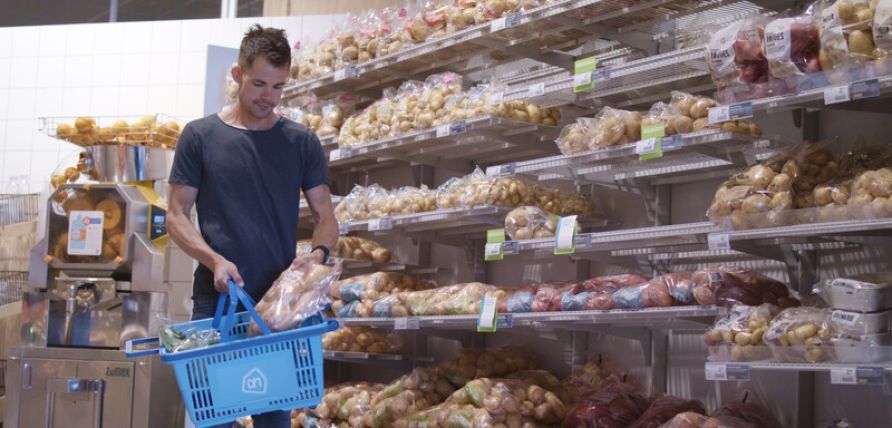
The sales of fresh potatoes in supermarkets has increased due to the corona crisis. People are staying at home and preparing their own food. They want a potato that looks appealing, tastes great and is easy to prepare.
Even before the corona crisis, retail was an important partner with which we developed special products and concepts, including specific packaging or potato formats. We are thus able to add value to our collaborations with packers and retailers. One example of this type of successful partnership is the introduction of La Vie in German supermarkets.
Our fresh market for retail has developed particularly successfully in Western Europe and North America. In Eastern Europe, supermarket sales are gradually increasing too. Our aim is to strengthen our position in the fresh market across the world. To this end, we have identified promising opportunities in South America, North America, China and Africa.
Traditional
The ‘traditional’ market segment is the biggest of the three. In large sections of our sales area, growers process the potatoes on the local market. Here, it is not the packers who decide which variety is to be grown, but the growers themselves. This requires a different market approach and direct contact with farmers. Important sales regions in this segment include North Africa, the Middle East., Eastern Europe, South America, Africa, and Central and South East Asia.
We expect the worldwide economic recession to have a significant impact on this substantial market segment. Many of the countries mentioned are highly susceptible to the absence of tourism and/or exports and struggle to access to hard currency as a result. In the past, we have seen that they subsequently spend less on importing seed potatoes.
At the moment, it is still hard to estimate the full, long term impact. The impact on us, in the food sector, will be less substantial than for other industries but we will certainly feel the fallout nevertheless.