4.1 The basis
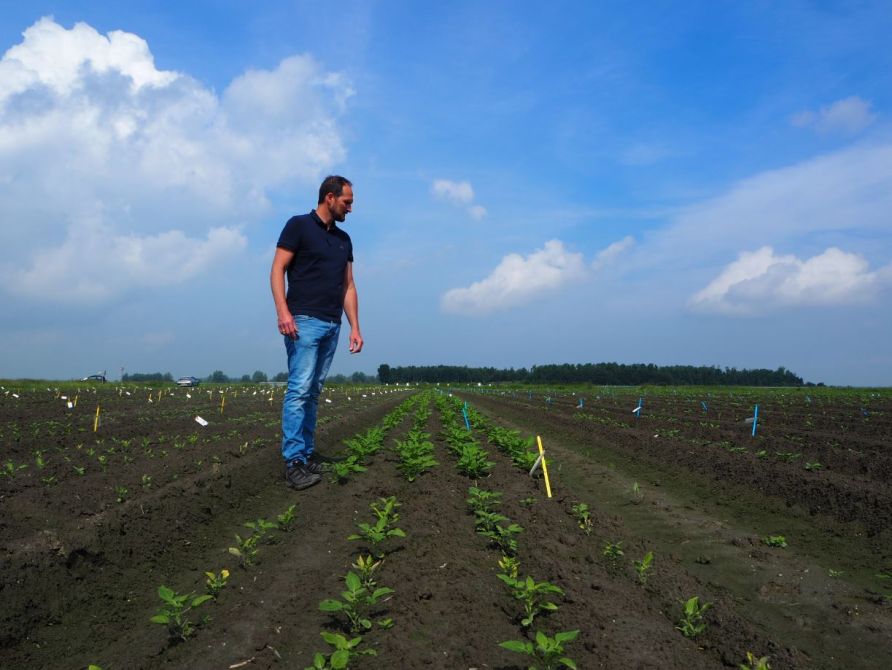
A potato seed. That’s the basis; where it all starts. A single seed which becomes a new variety and makes a huge difference in terms of the availability of responsible food for the world's population. In essence, breeding is just rearranging genes; combining the good characteristics of the father plant with those of the mother plant. That’s what we have been doing for decades: creating new potato varieties which fulfil specific requirements.
The basis remains the same but the knowledge, technology, and speed at which we can breed have changed significantly over the course of the years. As have the corresponding requirements for the potato. Innovation and sustainability have been the central themes for many years.
We spend 16% of our annual gross margins on research and development, which equates to around 10 million euros each year. Eight research teams work on projects which are tasked with delivering improved seed potatoes for specific markets and countries. Breeding is a team sport; the interaction between researchers and breeders determines success. This success is evident in new varieties which anticipate consumer needs and the various developments in the potato chain both now and in the future.
Less input, more output
Society is demanding potato growing that requires the lowest possible levels of pesticides. Growers want a low-risk crop that delivers good economic returns. This presents us with the challenge of developing vital varieties, which are resistant to virus, nematodes, and late blight (phytophthora), and are tolerant to physiological deficiencies due to plagues or extreme weather, even more quickly. Vital varieties which can cope with the odd setback, including suboptimal growing conditions. Lower input, greater output and good nutritional values. That is the biggest challenge.
Varieties for everyone
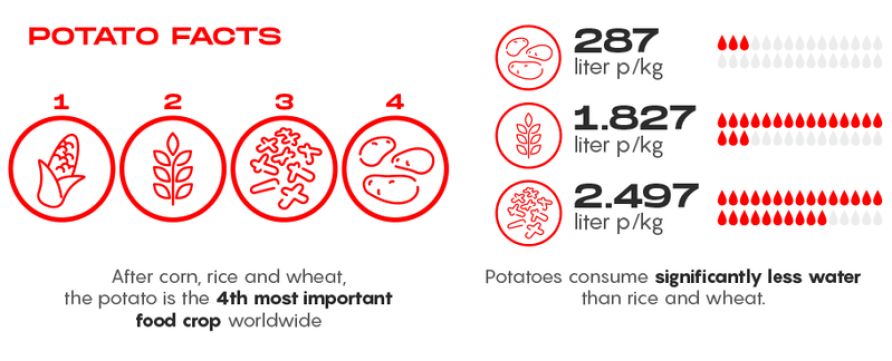
Sustainability also means exploiting local opportunities and working with the conditions as efficiently as possible. Areas with drought and heat need a potato that can perform well under these conditions. A potato is relatively efficient with water, compared to other food crops such as grain and rice, and specific varieties can raise this level of efficiency even further. By developing these particular varieties, we are supporting our driving force, i.e. food security for all, no matter where in the world.
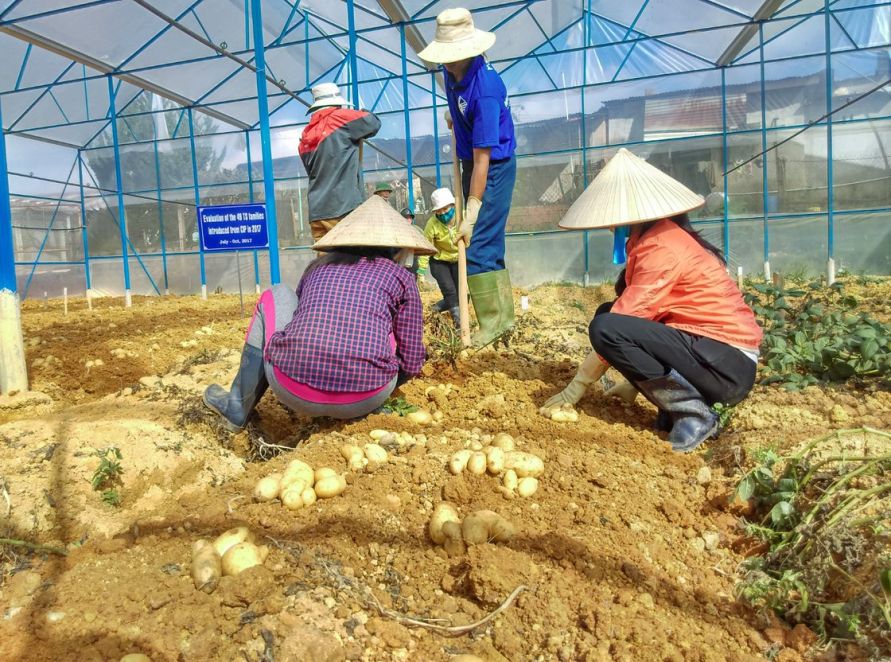
A great example is our collaboration with potato institute Centro Internacional de la Papa (CIP) and Syngenta Foundation for Sustainable Agriculture (SFSA). Together, we are developing potato varieties that are suitable for tropical conditions. We are currently running a selection programme in Vietnam. This has led to a number of varieties that we will continue to test in other tropical countries.
Syngenta Foundation for Sustainable Agriculture (SFSA) focuses on providing top quality material for small farmers in Asia and Africa. The potato is regarded as a highly promising crop for smaller farmers as it requires relatively low input, can deliver high yields, and offers excellent nutritional value. The tropical climate however, i.e. hot and humid, is not entirely suitable for the usual varieties. So the SFSA has created the first public/private collaboration for crop breeding, in order to develop specific potato varieties for the tropics. Within this collaboration, HZPC’s top quality varieties have been crossed with originally tropical clones from the international potato research centre CIP. The aim is to create varieties that fulfil the needs of smaller farmers in tropical countries.
Tasty varieties
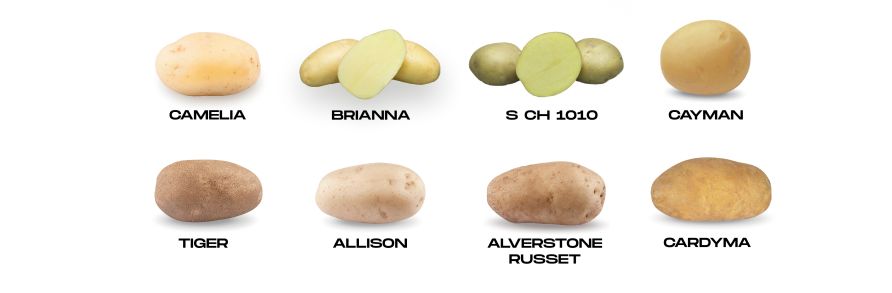
Sustainability and food security are aspects that permeate our entire breeding programme. But there are other features which can distinguish a variety. We can still make huge strides in terms of healthy eating and flavour and will focus on these areas in the coming years.
Technical innovation
Breeding is a quest to find the right combination of genes and it's something we've been doing for many years. And very successfully, too. In view of societal requirements and regulations that are changing more rapidly than ever, we have been able to accelerate our search process thanks to the development of new technologies.
We split the breeding process across three platforms:
- classic breeding, accelerated due to the use of molecular markers
- hybrid (seed) breeding with diploid inbred lines
- adapting existing varieties using gene editing
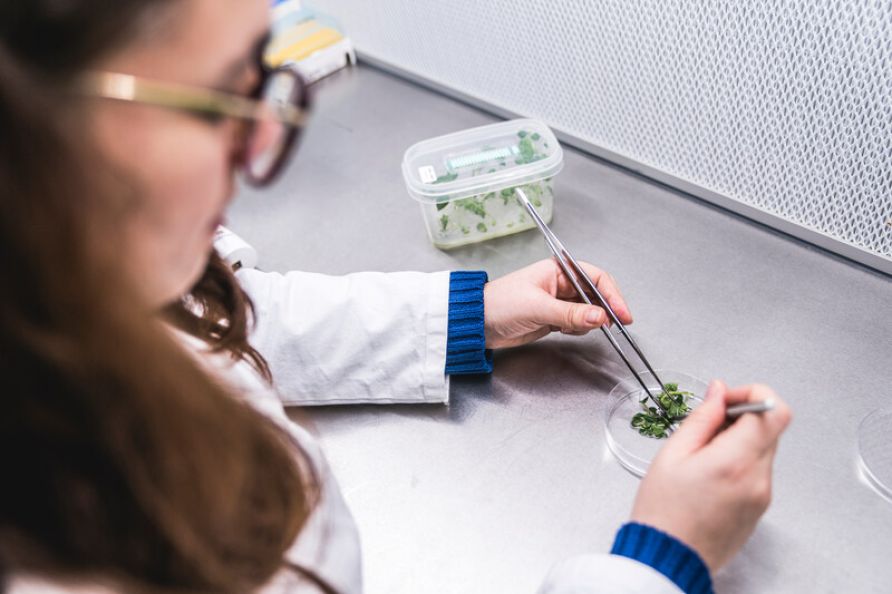
Moleculaire markers
Over the past few years, we have focussed on developing breeding techniques using molecular markers. As a result, we can make selections efficiently and quickly directly from the plant grown from a seed, without ever seeing a tuber. This speed will become increasingly important in the future as the world around us changes at high-speed. Techniques that allow us to establish variety performance at an early stage will become vital for maintaining speed and controls in relation to breeding. We have these techniques in-house.
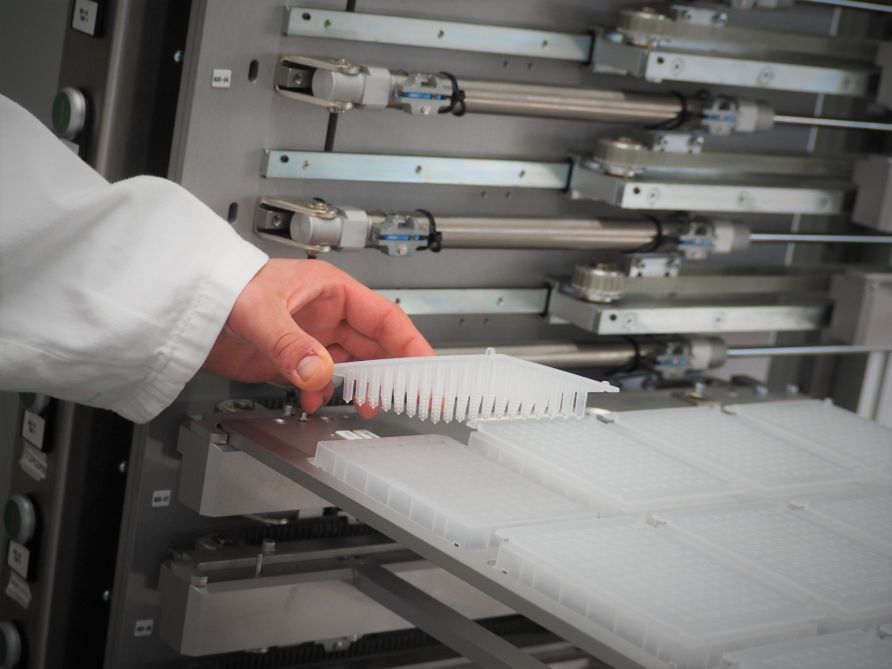
Hybrid breeding and potatoes from seed
Increasing food security in areas that are hard to access is one of the notions behind hybrid potato breeding. This breeding method has been applied to other crops, such as sugar beet, for many decades but is more difficult with respect to potatoes. We are convinced, however, that this method offers potential opportunities and have therefore committed a great deal of research capacity to it.
We are making huge strides with this technique. In Tanzania, we have trial fields where we are testing potato varieties grown with the hybrid method. By 2021, we expect to have created a prototype, which we will be able to market from 2025.
There is good reason for introducing this into Central Africa. The hybrid varieties that have been developed do not yet deliver the yields that can be realised using regular varieties. In Central Africa, however, the growing conditions are such that the difference between hybrid and regular varieties is less significant. Breeding allows us to substantially increase the yields from hybrid varieties and they can be bred using seed.
Another good reason for introducing these hybrid varieties into Africa is the logistical advantages gained from growing from seed. We have identified sales opportunities in Central Africa but transporting seed potatoes to this part of the world is expensive. Seed, therefore, is a cheaper way to transport our genetic material. This also applies, in the long-term, to other countries where the import of seed potatoes is tricky or not permitted.
Gene editing
Another breeding method that could offer rapid genetic progress is gene editing. This allows existing varieties to be adapted by changing the genetic structure of the plant itself. This method, however (and as far as we are concerned unjustly), is categorised under ‘genetic modification’ in the EU and is therefore not permitted in Europe.
New-build centre of expertise in Metslawier
Research, development and growth go hand in hand. Which is precisely why research and development are an important aspect for HZPC. Day in, day out, in the research and innovation centre in Metslawier, around one hundred employees work with their colleagues at universities and partners at home and abroad on improving potato varieties. The research and innovation centre ‘HZPC Research’ lies at the heart of Dutch seed potato growing but had effectively become too small for our growing company. In February 2020, the first pile was driven for the new centre of expertise at Metslawier. Some sections of the existing building will be demolished and replaced by a larger office and laboratory. Storage will also be expanded. This expansion will support the development of expertise, innovation, and growth.